
Do you want to make your own aloe vera soap using fresh aloe?
If so, then this tutorial is just for you!
I’ve also included a gentle aloe vera facial soap recipe, along with a variety of ingredient substitution ideas.
With a little bit of preparation, fresh aloe can be used to replace part (or all) of the water amount in almost any cold process soap recipe.
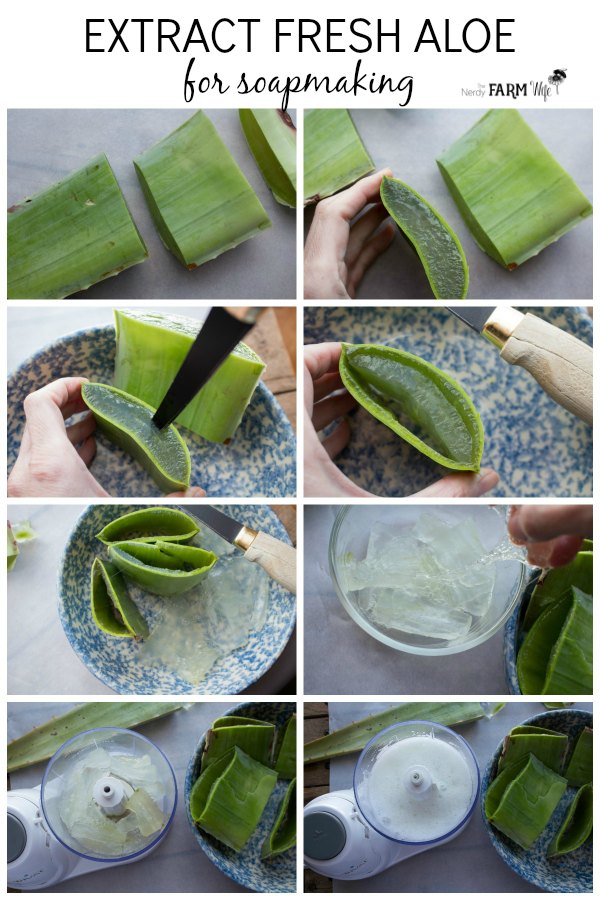
How to extract fresh aloe for soapmaking
- Cut the aloe leaf into several sections.
- Use a sharp knife to run along the inside edges of each section, separating the inner gel from the outer skin.
- Use your fingers or a spoon and press the aloe gel from the leaf.
- Place in a small food processor or blender.
- Process until smooth. (It will get fluffy, almost like egg whites.)
- Store in the refrigerator if you’ll be making soap within a few days, or freeze in ice trays for longer storage
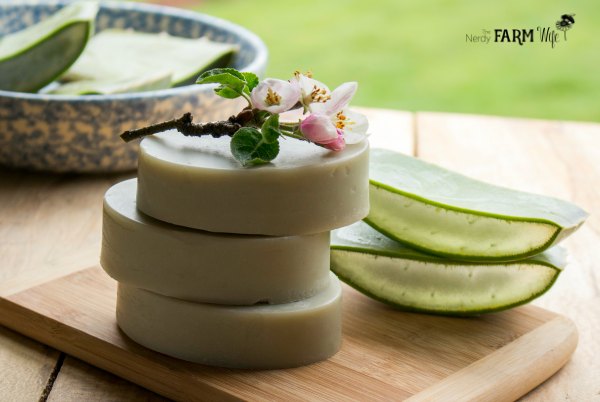
Aloe vera facial soap
This soap was designed to be extra gentle and is suitable for use as both a facial and body soap.
It’s a small batch size that exactly fills 5 of the 6 cavities in the oval silicone mold by Bramble Berry. (You could also double the recipe to fit in a loaf mold like THIS Crafter’s Choice one.)
If you don’t have fresh aloe, look for bottled aloe vera liquid which you can use in place of water in any soap recipe.
Ingredients for aloe vera soap
- 2.5 oz (71 g) distilled water
- 1.92 oz (55 g) lye (sodium hydroxide) – 6% superfat
- 2 oz (57 g) fresh aloe gel
- 6 oz (170 g) olive oil
- 3 oz (85 g) coconut oil*
- 2 oz (57 g) sunflower (or sweet almond or apricot kernel)
- 2 oz (57 g) tallow (or shea, mango or cocoa butter)
- 1 oz (28 g) castor oil
Optional colorants: 1/2 tsp chlorella powder + 1 tsp French green clay added to hot lye solution.
Optional add-ins: 10 drops ROE (rosemary oleoresin extract) to extend shelf life + 1/2 tsp sodium lactate to harden soap.
*If you’re allergic to coconut oil or have extra sensitive skin, try using babassu oil instead. The lye amount will change slightly to 1.9 oz (54 g).
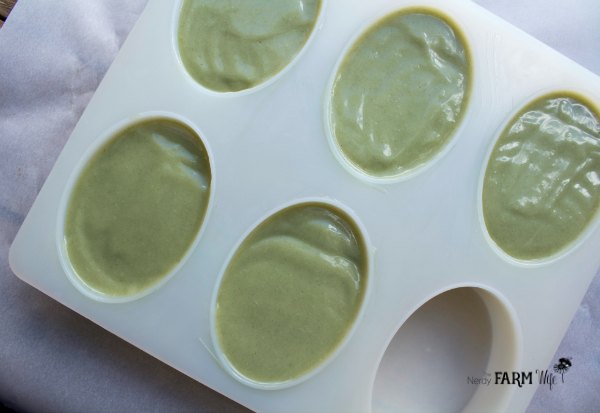
Directions to make aloe vera soap
If you’ve never made soap before, be sure to read over my Soap Making 101 tutorial before proceeding.
You may also find my Natural Soap Making Ebook Collection helpful; it’s filled with guides, handy printables, tons of natural soap recipes, plus a private Facebook support group where you can directly ask me any questions you run into.
- Put on goggles and gloves.
- Weigh the water into a stainless steel or heavy duty plastic container.
- Weigh the lye into a small cup.
- Sprinkle the lye into the water and stir well.
- If using, stir in the green clay and chlorella powder.
- Cool the lye solution in a safe spot for 30 – 40 minutes, or until about 100 to 115 degrees F.
- Stir in the sodium lactate, if using.
- Melt the tallow (or butter) and coconut oil, then combine with the remaining oils.
- Add the rosemary oleoresin extract (ROE) to the oils, if using.
- Use an immersion blender to thoroughly blend the fresh aloe gel into the oils.
- Pour the cooled lye solution into the warm oils/aloe mixture.
- Use a combination of hand stirring and brief short bursts of the immersion blender to mix until soap reaches trace.
- Pour soap into molds.
- Cover lightly with a sheet of wax paper, then a towel or blanket to insulate.
- Keep the soap in the mold for 1 to 2 days or until easy to remove.
- Cure the soap on sheets of wax paper in the open air for 4+ weeks before using.
Comments
Post a Comment